Showing posts with label fiction. Show all posts

Saturday, May 27, 2017

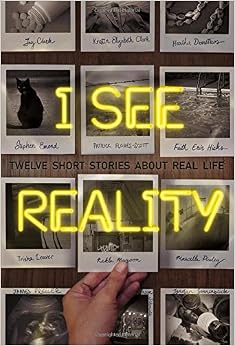
Book Review of I See Reality: Twelve Short Stories About Real Life by YA authors, compiled by Grace Kendall

One of my earliest introductions to YA, the genre I hold nearest to my heart (and enjoy writing the most), was actually not a YA novel, but, instead, a collection of short stories by authors whose works had been banned or challenged, edited by none other than the famed Judy Blume, called Places I Never Meant To Be. Half of my lifetime later, with as much reading as I do, I've never been able to find a YA short story collection that captured the same feeling. I gave up long ago, acknowledging that it was magical enough to have captured lightning in a jar just the once. ...and then, lo and behold, my sneaky book ninja friend gifted me with an ARC of this little gem. By the time I'd sunk my teeth into the second story, I knew: I See Reality had filled a second jar.

Had I found this book on a bookstore or library shelf instead of piled in amongst other books in the best type of care package--a box unapologetically stuffed with books--I would've selected to read it because of two of the contributing authors whose work I've loved: Trisha Leaver and Heather Demetrios. I posted a review here of The Secrets We Keep by Trisha Leaver, in case you're curious. (After eagerly awaiting it for way too long, the book still blew my socks off.)

Out of the twelve short stories included in I See Reality, I was moved by ten. All of them made me think, question, and gain new understanding. From Three Imaginary Conversations With You, in which Heather Demetrios introduces us to a high school senior who wants to break up with her older, controlling boyfriend to Kristin Elizabeth Clark's light touch when dealing with a gay protagonist finally gaining self awareness, each author brings unique characters in realistic situations to life in compelling and exciting ways. Kekla Magoon drives home the realities of poverty, racial identity, and abuse in Makeshift with such vivid sensory details that I felt WITH her characters--not FOR them. Jason Schmidt turns his narrative of a school shooting into the simplest and most touching story of a boy and a girl in Things You Get Over, Things You Don't. Prescription drug addiction and the pitfalls of high school romance come alive in Coffee Chameleon by Jay Clark. Marcella Pixley presents readers with a disturbing story of grief and mental illness in Hush, and Trisha Leaver speaks to everyone who hides his or her light under a bushel because of someone else's sins and other people's perceptions in Blackbird. In her untitled pithy short comic, Faith Erin Hicks makes a heartbreaking situation less painful with hilarity, while Jordan Sonnenblick sums up four years' worth of lessons in mere pages with The Sweeter The Sin. Capping off the whole emotionally reeling collection is The Good Brother, Patrick Flores-Scott's tale of two brothers: one who is in our country legally, and one who is here against the law.

If nothing else, that rundown should've illuminated the very breadth and variety of issues and situations the authors whose works are included in I See Reality have explored in depth. Whether your eyes caught the names of some of your favorite YA authors on the list of contributors, or you're just interested in good YA short stories depicting diverse characters in a multitude of difficult situations, I See Reality is a fantastic choice. I can't recommend this one enough!

Thursday, May 25, 2017

Book Review of The Secrets We Keep by Trisha Leaver

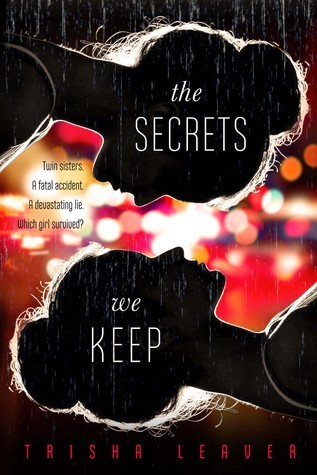
As a writer, reader, and lover of YA, I heard about The Secrets We Keep by Trisha Leaver almost a year before its release, and I was so excited that I actually marked the date in my planner in addition to immediately adding it to my book wishlist. I entered a contest to win an ARC, but didn't get one, so you can bet I had this title on preorder. All that to say: there was a lot of anticipation about this book for me, and I certainly wasn't disappointed! Merely reading the premise: that identical twin sisters are in a car accident, one survives, the other doesn't, and the surviving twin assumes the identity of the deceased twin was enough to get me interested, and the more I found out about the book, the more I knew it would be a must-read. But, in an epic book blogger fail, I forgot to post my review of this gem, and it has been sitting around in draft form ever since. As I went to post my review of I See Reality, a YA short story anthology with a short story by Trisha Leaver included, I wanted to refer back to this post, and that's when I realized my mistake. I love the cover design so much that, until my bookshelf got too crowded--what a good problem to have--it had actually earned a face-out.

For those of you who are dubious that a mix-up like that could happen, I point you to this story: which actually took place at the college I attended for undergrad while I was a student there, in which two completely unrelated girls were involved in a van crash and were misidentified as each other. They didn't even look like they could be sisters! ...so, one could see how this is certainly possible with identical twins. Also, because of this issue, I kept noticing that Leaver set up lots of circumstances to explain the questions of any potential doubters (Maddie was wearing Ella's clothing, when asked her name by first responders right after the accident, Ella was struggling to utter Maddie's name in a feeble attempt to ask about Maddie's condition, and Ella was driving Maddie's car at the time of the accident).

As the story continued past the car accident, what I found most powerful and compelling about The Secrets We Keep was that Ella, the quiet, studious, independent sister seemed 100% sure that her identity was devoid of value--that nobody would miss her. That misconception, combined with the crowds of people vociferously showing their support for "Maddie" right after the accident caused Ella to confuse popularity with personal value. ...not to say that Maddie didn't have value as a person, but just to say that she wasn't a better or more worthwhile person simply because she was more popular than Ella was. It took actually stepping into Maddie's (highly uncomfortable) shoes and pretending to be her sister for several weeks to realize that, while Maddie might have had many supporters and admirers, Ella was the beneficiary of unconditional love. Though not a "people person," her strong and meaningful relationships with her best friend (and potential boyfriend), her parents, and her art make the choice of which twin to be, which seems like a no-brainer to her at first blush, a truly difficult decision as time passes.

The Secrets We Keep deals genuinely and movingly with many serious issues: self-value and awareness, the true meaning and cost of popularity, personal ethics, the lesson that what we do can have a sometimes life-altering impact on others, substance use and abuse/underage drinking and drug use, grief, and unconditional love. If you enjoyed If I Stay and Where She Went by Gayle Forman, you may just like this book even more. This is one of the most powerful pieces of YA I've read in a long time. Highly recommended.

Sunday, May 21, 2017

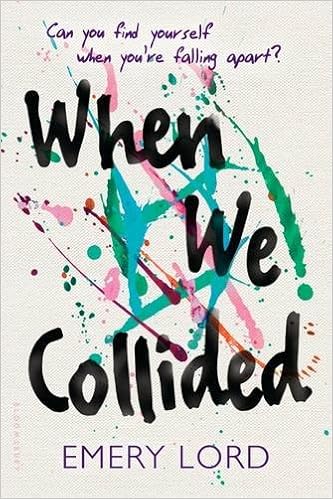
Book Review of When We Collided by Emery Lord

I checked out When We Collided by Emery Lord from my local library after encountering it on a roundup of YA books that do a good job portraying characters with mental illness. However, it did not live up to that promise, which was surprising, because the author's note alludes to this being an #ownvoices title. Ultimately, it felt like a  less well-written Sarah Dessen novel mixed with many plot points shamelessly copied from Party Of Five. The cover design was a disappointment to me. With Vivi's keen interest in fashion and her job at the pottery studio, and the picturesque vacation town setting, I feel like there were many aspects from the plot to draw on that would've been visually pleasing while still related to the story.

Vivi is staying with her mom in Verona Cove for the summer and working at a paint-your-own-pottery studio. She loves vintage fashion, and often sews her own clothing and undertakes other creative projects. She also has bipolar disorder. Jonah is helping to take care of his younger siblings and keep his large family together, as well as trying to keep the family's restaurant running in the aftermath of his dad's sudden death. His mom is mostly non-functional, due to grief-induced depression. When We Collided is the story of Vivi and Jonah's relationship over the course of a summer.

Aside from weak writing, plot and logic inconsistencies, and a general feeling that most of the aspects of this book were shamelessly taken from other sources and smashed together, my main complaint about When We Collided is how Emery Lord dealt with bipolar disorder and mental illness through the character of Vivi. The author's note is written in such a way that makes me think this is an #ownvoices book, inspired, at least in part, by Lord's own experiences with mental illness. That's why I found her free usage of words like crazy and insane when describing Vivi shocking. More than that, Vivi is written like just your average MPDG YA character: she has a flair for original and vintage fashion, she's impetuous and moody, she breezes into the life of a guy with real substance and shakes everything up, seemingly just because she can. 

This treatment of Vivi's character--and of Jonah's responses to her behavior--made the whole story feel like one tired YA trope, instead of a true look at what it means to be in a relationship with someone who has bipolar disorder. Vivi doesn't come across as an empathetic character who has a health challenge--she comes off as selfish and immature when she leverages charm and originality to get away with everything she does. To me, When We Collided didn't read as a YA summer relationship/romance-y type novel that also dealt with serious issues, as much as it read as kind of a horror story: Jonah got hooked by Vivi, and then I waited on the edge of my seat to see just how much she was going to wreak havoc on his already stressful life. It felt to me like Jonah was Vivi's victim, more than he was her love interest. I feel that's entirely the wrong way to present a character with bipolar disorder, and a relationship between that character and another one. For those reasons, I absolutely don't recommend When We Collided by Emery Lord.

Tuesday, May 16, 2017

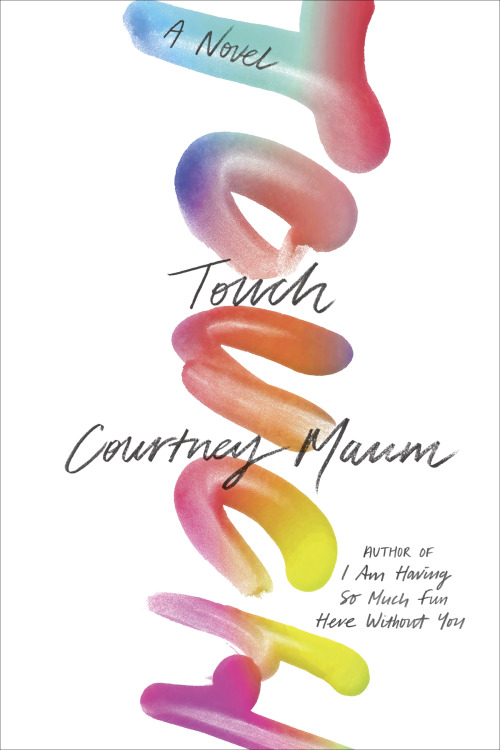
Book Review of Touch by Courtney Maum

I won an ARC of Touch by Courtney Maum from the publisher. I entered the giveaway for one simple reason: I was enamored of the cover design. Something about how the title was printed vertically, in rainbow-hued smears that looked like the result of fingerpaints and black scrawl that called to mind a hurried grocery list scribbled on a stray Post-It more than it did a publisher's typeface really appealed to me. It felt visceral. It felt human. It felt alive.

As I began reading the story of Sloane, an American ex-pat and professional trend forecaster living in Paris with her longtime boyfriend and oft business collaborator, I realized all of those cover design elements weren't simply employed because of their sensory appeal--they tied into the themes of the book rather profoundly.

Sloane is returning Stateside for a six-month trend forecasting gig at a high-powered tech company mere minutes from the family from which she's become all but estranged since her Dad's death three years ago. As her Parisian boyfriend Roman withdraws from her in favor of temporary fame and neo-sensualism, Sloane realizes what she craves (and, what other humans are sure to crave in this increasingly isolated digital age) is simple: human touch and face-to-face connection. Delivering this message runs directly at odds to her mission at the tech company, where gadgets and sensationalism reign supreme, but fits into her newfound--or newly realized--desire for familial relationships and human closeness.

Touch deals deftly, albeit with some sensationalism of its own, with ultra-relevant issues of the day. Featuring characters who feel tethered to their phones at the expense of relationships and relationships that have suffered the death of effective communication, Maum has written a book which manages to be both engrossing and applicable to her readers' lives. It feels like one part chick lit with all of its attendant tropes and requisite plot points, and one part futuristic dystopian novel with its searingly honest look at technology's role in our lives. Its contrast of touch vs. technology wrapped up in a chick lit package reminded me strongly of another book: My (not so) Perfect Life by Sophie Kinsella, of which my review is here. I'd recommend it to anyone looking for intelligent chick lit, or a dystopian look at technology with the classic rom com will-the-or-won't-they plotlines. Touch comes out May 30th.


Sunday, May 14, 2017

Book Review of The Lost & Found by Katrina Leno

I borrowed The Lost & Found by Katrina Leno from the library because I loved Let's Get Lost by Adi Alsaid and Playlist for the Dead by Michelle Falkoff (the two authors whose blurbs were on the back cover). I find blurbs to be a very hit-or-miss way of finding new books I enjoy: just because an author whose work I like also liked a particular book, that doesn't necessarily mean I'll like it. Usually, I have to read 2-3 things recommended by a certain author before I can get a feel of whether or not that author's reading preferences mesh well with my own. There are authors whose writing I love, but whose reading recommendations I consistently don't enjoy, and there are authors whose writing I don't like, but who give great book recs. Unfortunately for me, if our opinions of The Lost & Found were any indication, my reading tastes don't match up with Michelle Falkoff's or Adi Alsaid's. I was mostly disappointed by this one. The cover, while quite appropriate to the story, was very meh.

Frannie and Louis meet on a web community for teens dealing with trauma. After years of exchanging messages with no identifying information included, each one suddenly and miraculously receives a letter leading him or her from opposite sides of the country to Austin, Texas, where they decide to meet face-to-face for the first time, bringing their respective best friends--cousin Arrow and sister Willa) along for the ride.

...which all sounds like it could be the making of a good YA novel, if a little too convenient with the double letters arriving at pretty much the same time plot device, but whatever. Leno used up most of my suspension of disbelief of random things happening just because they were convenient for the story with those two plot points aligning. So, when very poorly written elements of magical realism that feel like one deus ex machina after another swooping in to wrap up yet another loose end of the story keep happening, and that turns out to be the style in which Leno decided to write the entire book, well, I completely lost interest. I couldn't find the end of this one fast enough when I realized this messy nonsense was supposed to be the crux of the plot. 

However, for all of its faults, diversity is something Leno mostly did well in The Lost & Found. Louis and his twin sister Willa are half Indian. Willa is also a double amputee with two prosthetic legs, and I felt Leno's representation of her was sensitive and thoughtful. Willa's character was so much more than her disability or her challenges, and I really enjoyed how she didn't fit into the common tropes for disabled characters in YA. Louis has panic attacks and is dealing with a past of self harm--issues that are creeping back up for him over the course of the story. Frannie's cousin and bestie Arrow is Vietnamese and adopted. Frannie's mother is Schizophrenic, and Frannie wonders if she's genetically predisposed to the same fate, but this is the one area I had a problem with, because Frannie's mom wasn't written about with any sort of dignity or respect as a person with mental illness. (The words "crazy" and "insane" were used often in reference to Frannie's mother.)

Ultimately, I really don't recommend this book. Between the offensive ways Leno chooses to refer to a Schizophrenic character and some of the worst magical realism in YA I've ever read, I honestly don't understand how anyone could enjoy it. This is one of those stories where the execution in no way lives up to the premise. If you're looking for some fabulous YA magical realism with great diversity, try American Street by Ibi Zoboi--link here for my review--or The Walls Around Us by Nova Ren Suma--link here for my review.

Friday, May 12, 2017

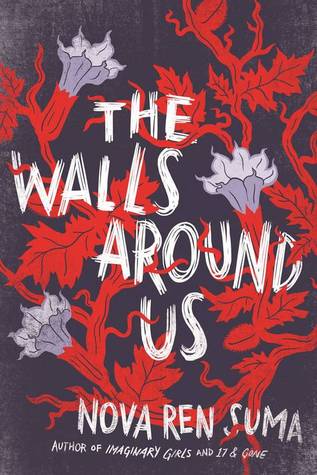
Book Review of The Walls Around Us by Nova Ren Suma

This review was written in February 2015, right before The Walls Around Us was released the next month. I'm posting it here on the blog for the first time because I wanted to refer back to it in another review recommending YA magical realism with diversity, and also because it's an amazing book, and if any of you guys haven't heard about it, you might want to check it out! A bit of a reading update--since I wrote this review, I've read 3 other books by Nova Ren Suma, and some short stories. She has become one of my favorite authors--a must-read anytime her new works are published.

I have to be honest... when I got this ARC in the mail, I wasn't expecting much. I hadn't heard of the author before, and was only aware that this buzzy new YA book coming out in March was supposed to shake its readers to the very core. To me, the cover design was both loud and tacky. Also, it didn't translate into any kind of mood or theme to prepare me for what I was about to read.

...but then, I started reading. It was difficult to get into, at first. Part of my frustration was being unable to get a firm footing as far as the two settings of the book: a dance studio and its surrounding world, and a juvenile detention facility, both in modern day upstate New York. But pinpointing that, along with trying to untangle how the three narrators: Amber, Orianna, and Violet are related to each other took some work, and without having read any of Suma's other writing, or having a clear understanding of what this book set out to deliver, well, I wasn't sure if it was worth it or not.

All of a sudden, however, somewhere around 100 pages in, which is usually the point when the last few stragglers unsure of whether or not they want to be reading a book if they're waffling about it usually throw in the towel and decide to be done, that feeling dissolved. All I can say is, similar to the feeling Violet, a teenage ballet dancer, describes after she's done dancing and a hush falls over the audience and nobody is clamoring for the exits, I just sat there, probably for a good 20 minutes after I finished reading this book... simply being quiet and sad, moved, confused, and awed by the journey on which this author whom I hadn't fully trusted had taken me, despite my doubts. Her two other YA books (Imaginary Girls and 17 & Gone) didn't get added to my wishlist so much as flew onto it.

I don't want to say too much, because I don't want to ruin the mystique the book held for me, as I came to it from a place of almost completely no context, but I do want to do two things: urge anyone who likes YA to read it, and reassure those readers that, if they share the feelings I had, there are many valid reasons to push through until the 100 page mark, or so, and, that if you do, you won't even notice the next hundred plus pages as they whip by. 

This book has a profoundly moving story, beautiful imagery and symbolism, and gives a realistically graphic portrayal of life in a juvenile detention facility. There's much diversity, and it is done thoughtfully, in ways that add to the characters and the story. But, more than that, Suma opens up new worlds to her readers, who may not realize for quite some time exactly that they intertwine more than they collide.

The publisher has been describing it as "Orange Is The New Black Swan," and that totally fits. Highly recommended.

Wednesday, May 10, 2017

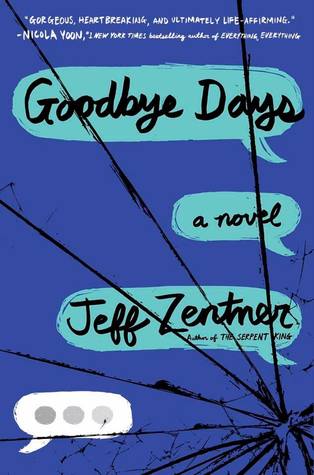
Book Review of Goodbye Days by Jeff Zentner

Goodbye Days by Jeff Zentner is another one of the inaugural batch of YA titles recently added to the Blogging For Books program. So, when I read several blurbs likening it to Looking For Alaska (which I loved), I thought I must request a free copy of this book for the purpose of review. I haven't read Zentner's first novel, The Serpent King, but now that I've finished Goodbye Days, it definitely holds a place on my TBR list. Before I get into why Goodbye Days turned Zentner into a must-read author for me, can we talk about its artful cover design for a second? I love the simplicity of the color palette, the word bubbles' resemblance to a text convo, and the textured web debossed into the cover, meant to signify a shattered windshield. I don't think this cover could be more apropos for the story, or more pleasingly elegant in its simplicity.

Goodbye Days tells the story of Carver Briggs, the only remaining member of a friend group of four guys who jokingly called themselves The Sauce Crew. The book opens in the wake of the deaths of Mars, Eli, and Blake--Carver's friends who perished in a car crash when Mars took his eyes off of the road while behind the wheel to answer a text from Carver. While dealing with his own grief, loss, and guilt in the aftermath of the accident, Carver begins experiencing panic attacks, and the book chronicles his sessions with an amazing therapist.

Goodbye Days tackles a multitude of complex issues with aplomb. From wrestling with the question of who is at fault, both legally and morally, for the accident to addressing that oft uncomfortable verbal space between parents and their teenage sons and daughters, Zentner does not shy away from tough queries--even if he doesn't have answers for them at the ready. Goodbye Days prominently features issues of mental health in a way that is productive, empathetic, and realistic. It features a young female character who is Filipino and has Caucasian adoptive parents, empowering her to frequently call out comments and actions that may be sexist or racist in a way that is neither condemning of the speaker, nor allowing herself to become a doormat. It also highlights a dysfunctional father/son relationship between a high-achieving Black Judge and his son, the parameters of which have been set by the ultra-strict father, based upon his own personal struggles trying to get ahead in the world as a Black man. It features a gay character who dies closeted to a very loving relative because he worried that her religious beliefs wouldn't allow her to accept his identity, and it deals with this plotline with super sensitivity. It also chronicles severe child neglect and abuse, but somehow does not allow the book to get sidetracked by the disheartening images described.

All in all, I can see the reasons why people might compare Goodbye Days to Looking For Alaska, but I think comparison to any of Chris Crutcher's books would be more apt. Zentner's writing features the same emotional truth, appearance and clash of characters weighted down by eerily lifelike problems, and stark contrast of adults who couldn't be more helpful with those who couldn't be more harmful to the teen characters he introduces on the page. Just as with Crutcher's books, this is a winning combination--one that lends the power and verisimilitude that keep Goodbye Days from being preachy, overwrought, or smacking of condescension. Highly recommended for those who like YA that artfully balances humor with solemnity.

Tuesday, May 2, 2017

Book Review of The Last Good Girl by Allison Leotta

I checked out The Last Good Girl by Allison Leotta from the library to read and review on the suggestion of a friend who knew I enjoyed books by Kimberly McCreight and noted their similarities. After finishing the book, I can definitely say it was an apt comparison. The book doesn't look like much, though. The cover is possibly the biggest letdown about the whole publication. Though it has imagery that makes sense with the story, the whole style is too soft and picturesque for the gruesome, gritty tale held within its pages.

Unfortunately, while this particular tale is based in fiction, readers need look no further than the nearest college campus for evidence that the themes Leotta included are all too relevant. Fraternity abuse of privilege, sexual assault on college campuses, policies that put assault victims on trial more than their attackers, Title IX enforcement that is lax or nonexistent, fundraising politics overshadowing ethical obligations, class disparities, and female students allowed to be intimidated when they attempt to speak out about their terrifying experiences are all factors of the modern college landscape.

Leotta addresses these issues deftly and with purpose in telling the story of Emily, a missing college Freshman who was last seen leaving a bar while pursued by Dylan, a fraternity brother from her campus whom she had accused of sexual assault. As the search for Emily (or, potentially, her body) escalates in the blighted Detroit area just outside of the verdant college campus where the alleged assault took place, the amount of impropriety, intimidation, and other abuses discovered in conjunction with the investigation is staggering. And, still, no Emily. 

One of the things I liked about this book, aside from the timeliness and the importance of the issues Leotta included, is that the plot kept me guessing. I didn't figure out the ending until there were mere chapters left to go--a feat for Leotta, considering that I find most suspense/thriller/mystery books frustrating in their predictability. 

I didn't much care for protagonist Anna Curtis, the prosecutor who is leading the search for Emily. I felt Leotta included an overwhelming and unneeded amount of detail about Curtis in an attempt to flesh out the book. I would've liked more scenes showing students reacting to Emily's vlogs once they went live, or other similar inclusions that would've added to the main plot of Emily's disappearance and other students' reactions to it, instead. I didn't find Anna to be a particularly empathetic character, and I got bored of reading about her struggle in choosing between the two men who are interested in her, and the two cities where she could live. If forced to read more about Anna at all, in order to unravel what happened to Emily, I would've liked to read more about Anna's relationship with her sister Jody, as I felt it meshed better with the look at sisterhood and female activism themes in the story, especially later when Jody became involved in the investigation.

All in all, The Last Good Girl was hit-or-miss for me. The suspense plot was riveting and relevant, but the protagonist was boring and eye roll-inducing. If the current issues and well-plotted mystery thread are enough to keep you reading, I'd recommend it, but if you require a protagonist you can really root for to lead such an investigation, The Last Good Girl by Alliston Leotta is one to skip.

Monday, May 1, 2017

Book Review of You Will Know Me by Megan Abbott

I put You Will Know Me by Megan Abbott on hold at the library after learning about it via Shelf Awareness. What I read about it in that newsletter made me wonder if it would turn out to be like Make It Or Break It-goes-to-the-dark-side. It was, and I was far from disappointed. The cover, however, is a different story. Also, the title left much to be desired, in my opinion. After truly enjoying the book, I'm baffled at the cover art and title choice, as they feel completely unrelated to the story.

You Will Know Me gives readers a look into a strange world, the secret machinations of which they'd never otherwise be privy to, and that world is US Elite Women's Gymnastics. That title may be a bit deceptive, because, by  the title of "women," you might think they're adults. Nope. The gymnast in question in this story is Olympic hopeful Devon and, though there are some plot inconsistencies regarding her age, she is purported to be 15. She spends at least 30 hours in the gym per week, and her parents have a second mortgage on their house just to fund her Olympic dreams. She does not go on dates, indulge in sleepovers, chill, hang out, have an after school job, or a hobby, or do anything else that most teenagers do. Devon lives her life in pursuit of one goal, and everything she does (and her family does, by extension), is in service of it.

Unlike many families wherein such single-mindedness on the verge of seeming insanity is at play, it is Devon--not her parents--who has chosen this life for herself, and whose drive pushes them all forward. From the other girls at the gym to her coach, from her parents to her little brother, to the other gym parents, everyone in Devon's orbit operates to serve the goal of Devon competing in the Olympics. That, in and of itself, is both awe and horror-inducing... but then, when Abbott forces readers to confront the question of what those within Devon's insular world would do to protect and ensure that Olympic dream, a whole other level of horror sets in.

Abbott has selected Devon's mother, Katie, as the protagonist of the story. After finishing the book, I'm not so sure this was the best choice. I would've much preferred to hear the story unfold as from Devon's younger brother Drew's perspective. I think that would have both underscored the level of terror and also balanced the question of reality vs. hallucination/fantasy/nightmare nicely, as adults frequently disbelieve Drew throughout the story about things he has observed.

Devon's foot was disfigured in a truly disturbing accident involving a lawnmower when she was just a toddler. Not only does this give the otherwise impervious Devon a compelling weakness (both physically and emotionally), but it also adds an interesting twist to the story that a gymnast competing at the highest level doesn't look completely like the airbrushed/flawless young women we're used to seeing on the vault and beam. Also, her foot is an interesting litmus test for readers as to the true personalities of some of the other characters: seeing how certain people react to her foot's altered appearance all these years after it has healed shows us more about the character doing the reacting than it does about Devon, herself. And its inclusion in a story about a girl who seems superhuman is interesting, too, as most people would think of such a disfigurement as a disability.

Sadly, I was able to predict the real outcome of the main plot from not far at all into the book. I really wish Abbott had added more plot twists so that I would've at least had to work for it a bit. But, that predictability didn't stop me from paging forward with a horror-filled expression on my face as I watched events unfold just as I had feared. Even knowing what was going to happen didn't make Devon's world any less strange or interesting. If an overly predictable version of Make It Or Break It gone suspense thriller is your jam, I recommend You Will Know Me by Megan Abbott.

Friday, April 28, 2017

Book Review of The Garden of Small Beginnings by Abbi Waxman


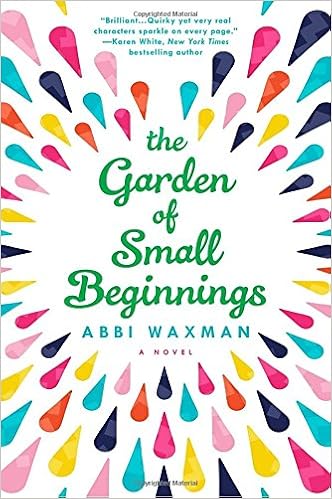
The Garden of Small Beginnings and I are in a Facebook Relationship, and our status is: It's Complicated. I'm still not sure exactly why I received this ARC in the mail. Did I enter a giveaway and then promptly forget having done so? Was it as a result of being on a list of book bloggers? I have no idea. Thus, it is a tad outside of my comfort zone, reading-wise. See, I enjoy some chick lit.. very selective chick lit. But the chick lit I enjoy is usually British, and runs to the likes of Jane Green and the lesser-known works of Sophie Kinsella, so as I unpacked and examined this book, I wondered if it was even close to my "thing." On the one hand, the cover is visually pleasing, colorful, and really lights up the pleasure buttons in the same parts of my brain that are obsessed with graphic design and typography, and is refreshingly devoid of a cartoonized couple kissing whilst surrounded by doodled hearts and flowers. On the other, I feared it would lean a bit too much toward the Eat, Pray, Love/Under the Tuscan Sun type of book for my taste. But, really: see what I mean about the cover?

Other than the cover, I love the way there are pages sandwiched between the chapters and each page features a sketch of a plant and then growing instructions for said plant, as if that page was pulled straight from a gardening manual. In addition to drawing me into the world of Lilian, a widow who has recently (against her will) become immersed in a community gardening class, rather effectively, these inserts also taught me some interesting and unforgettable facts about agriculture that provided a nice takeaway value, aside from the enjoyment the novel provided. I also really respected the way it would've been easy for Waxman to make Lilian's two young daughters simply cookie-cutter elementary school-aged girls, but instead, these characters are delightfully imbued with such distinctive personalities that I would've been able to tell their dialogue apart without attributions. The level of sarcasm and wit included in the dialogue and infused into the narrative voice really set The Garden of Small Beginnings apart from many other books of this type. In between banter about the gender identity of worms and the genitalia of whales, sappy kissing scenes just don't feel so cliche. And I like how Waxman doesn't simply gloss over Lilian's grief and loss, but truly forces her character to deal with it and illustrates just how bad it got by describing Lilian's resultant mental illness in pointed detail on several occasions.

However, there were weaknesses that particularly bothered me. Some were glaring continuity issues that distracted me from the story. Those charming between-chapter garden inserts felt as if they were written in the protagonist Lilian's voice (which is quite distinctive), but she is a professional illustrator and the book goes out of its way to say that she does not ever write any of the accompanying text for her illustrations (which have mostly appeared in textbooks up until this point), so that doesn't quite gel for me. Also, the instructor at the gardening class makes a point of saying how the participants will rotate from section to section of the community garden each week so that they can get the full range of experiences and learn how to grow all of the various plants... and then, the narrative has the characters show up and work in the same section of the garden on the exact same plants week after week for the entirety of the class. And very early in the book, Waxman makes a big deal of saying that Lilian frequently speaks aloud to her deceased husband--something which puts the reader on guard for exactly that... which, then, never happens in the manuscript. 

On the whole, Waxman's treatment of mental illness is hit-or-miss for me. I appreciated how she made it obvious that dealing with Depression wasn't simply something that could be checked off of a list, but something that required maintenance. But, I wondered if someone who'd had a similar experience and reaction to Lilian's regarding her husband's death might find some of the phrasing in the book offensive. Since that isn't me, however, I can't comment on it one way or the other. The chemistry between Lilian and her new potential love interest is compelling, and, since I actually don't enjoy much romance on the page, I appreciated that it was very subtle and more about communication (verbal and non-verbal, but also mostly non-physical), than it was about the physical aspect. I felt that Waxman's treatment of the dynamic heightened my interest, and I appreciated the subtlety.

All in all, whether or not I'd recommend The Garden of Small Beginnings to you depends completely on who you are and what you're looking for. If you're in it for a gardening-themed book, I'd say jump right in with no reservations. If you like to read about professional illustrators, there might be enough to keep you engaged. If you like witty banter and subtle flirtation, you'll probably love this book. If you are into hot-and-heavy romance novels, I'd give it a pass. But, if plot inconsistencies drive you crazy, this isn't the book for you. 

Wednesday, April 12, 2017

Book Review of June by Miranda Beverly-Whittemore

When I selected June by Miranda Beverly-Whittemore free from Blogging For Books for the purposes of this review, choices were limited, and I felt very meh about all the options, including this one. If you read my blog on a regular basis, you know I'm a varied reader across several genres and styles, so I thought my openness would serve me well here. Unfortunately, despite the attractive font (Have I told you guys how much I'm into typography?) and generally charming vintage-feeling cover design, the book didn't hold any deeper interest for me once I opened it.

My struggle with getting into the book began with the first sentence, which made it apparent that the house, Two Oaks, a rambling, ramshackle estate which was once grand and built in nowheresville, Ohio. Despite the house being described in detail (inordinate detail, seemingly never-ending detail), I never got the impression, as a reader, that the house had an actual personality, besides being large and fancy and in a state of disrepair. It felt like Beverly-Whittemore was desperately trying for the narrative voice style like at the beginning of Sabrina (you know: the outdoor tennis courts and the indoor tennis courts) or that of Midnight In The Garden of Good And Evil with the old-fashioned (and old moneyed) small town charm and failing miserably. Not only was that disappointing, but it left me without a compelling "in" as a reader. There are tons of large old houses that haven't been well cared for in the world. Why should I invest my time reading about this one? I still don't know.

On top of that, the more annoying part of June is that Beverly-Whittemore seems to think she's charming, or perhaps someone told her that at some point. She seems to think she's being clever when she names a character June and then talks about the character and the month of June in the same sentence when the narrative doesn't require it (nope--just annoying and slows my reading down). It's like she aimed for somewhere twixt twee and glamorous. Unfortunately for her, she landed on basic. Her sentences feel like they are never going to end, and they also feel like they aren't really adding much information or description or even mood to the book. She wants so desperately to be literary, but most of her prose is as overwrought as the railings of Two Oaks I'm sure you could spend several collected pages reading about if you really wanted to. Unless this sounds appealing to you, I really can't recommend June by Miranda Beverly-Whittemore. 

Saturday, April 8, 2017

Book Review of Ready Player One by Ernest Cline


Ready Player One by Ernest Cline is like a post-apocalyptic Charlie and the Chocolate Factory, but with much of the action taking place inside an online simulated reality. No, it isn't as good as it sounds. ...it is better. The contents of the book more than make up for any disappointment the cover design might provoke, which was significant, on my end.

I've labeled this book simply as "fiction," because to try and define its genre is to dismiss many of the ingredients that make it so original (especially for a project with a definite purpose of paying loving tribute to fandoms close to the author's heart). It feels like dozens of things I've loved, the best parts of which have all been reassembled to create something simultaneously charming and baffling.

Suffice it to say, the protagonist is empathetic and the side characters are well-developed and endearing. The real-world 2044 setting is a terrifyingly bleak, but probably downplayed, look at what our planet will be like if we don't get a handle on this whole global warming thing. And the Inception-like settings within that world--the battleground on which Wade and countless others fight their way through obstacles and reason their way through puzzles--are diverse, detailed, and derivative in the best way possible. Chances are, if you have loved videogames, songs, or movies from the '80s, reading Ready Player One will give you the distinct pleasure of getting to watch Wade Watts navigate his way through some of them as part of his epic quest.

*Spoiler alert.* The thing I loved most about this book is actually its biggest surprise, so if you haven't read it and you like surprises, stop reading now! It is the true identity of the character Aech. If you read like a detective (like I do), you'll realize that Wade's assumptions that Aech is a straight male like himself just don't jive. From there on, you'll spend their dialogue picking up on little clues here and there and you will put together that Wade is surely wrong. I, for example, thought I had surely "deduced" that Aech was a gay male who had feelings for Wade. Um, oops. Nope! Surprise: Aech is actually a Black lesbian female, who has chosen (with some guidance from her mother) to assume a white male identity online after her mom's own personal experiences showed her firsthand that posing as such would get Aech more opportunities and respect. (Sound familiar? ...and some people say Sci Fi isn't relevant to real life. Oh, please.) Cline saves the big reveal for Aech's offscreen identity until the perfect time in the narrative, when readers are so stressed out about how everything else will turn out that they aren't even recalling all of the little suspicions they've been toying with throughout the narrative. This is done perfectly, and it was the most satisfying aspect of the story for me, because it really put a hilariously lovable character's face on one light-handed tale of discrimination. In a modern society where Black females (and anyone else of a visible minority or Diverse identity) doesn't always have the option to pose as a white male, this should be a powerful takeaway for readers who haven't personally confronted the harsh truth of discrimination.

Ready Player One is a love letter to geekdom, and anyone who ascribes to that label will want to read it, and also make note of the movie (based upon the book) which is slated for release later this year.

Monday, April 3, 2017

Book Review of Allegedly by Tiffany D. Jackson


I've had Allegedly by Tiffany D. Jackson on hold at the library ever since Nena Bolling Smith Tweeted about how good it was. (Since every other book rec from her has been on point, I was sure this one wouldn't let me down.) Then, when I wrote in to Jamillah, founder of the amazing Call Number book box to tell her how much I'd been enjoying her book recommendations, she seconded this one, so I was thrilled when I finally got that sweet sweet notification from the library saying it was ready to be picked up. Something about how empty the cover is and how small Mary, the MC, is depicted on the front, and about how you can't really even make out the details of her face is very powerful. The cover design really works for me.


Since I love stories about Juvie and group homes and the like (The Fosters, The Walls Around Us, Short Term 12), I figured Allegedly would be right up my alley. It tells the story of Mary, who was nine when her Mom was babysitting a baby girl who died. Mary was convicted (without a trial or, really, any evidence) of killing the baby and sentenced to six years of juvenile jail before she is transferred to a group home, where the story picks up. Some may assume the crux of the narrative lies in the potential racial conflict (Mary and her Mom are black, the deceased baby girl was white), and other readers might think the story's focus lies with Mary's Mom's physical and psychological abuse and obvious mental illness. ...but Jackson will keep readers guessing (or assuming they know what's going on) right up until the very end. 

One thing that really didn't work for me were the excerpts, sprinkled liberally throughout the book, which are supposed to show bits and pieces of books, interviews, and testimony having to do with Mary's legal case. The writing within them was of poor quality compared to that of the narrative itself, and I found them to be distracting and frustrating, as a reader. While I realize that some of them contained necessary information, many did not, and I felt like they were just wasting time and page space in a book that was longer than it needed to be. 3/4ths of them could've easily been removed without taking anything away from the story. And, in addition to tightening up the book, this would have also stopped the feeling of being ripped out of Mary's world at the moments when I usually found it to be most compelling.

Jackson does not shy away from the ugly truths of the juvenile "justice" system. She accurately portrays the wretched conditions in which children who are suspected of or have been found guilty of crimes are allowed to exist. Jackson shines a light on the many adults involved in the system who are out for themselves, instead of striving to improve the lives of the children they are employed to rehabilitate. She also highlights intersectionality well, allowing her readers to feel the full weight of poverty, a Black identity, the stigma of mental illness, and the label of "violent criminal," as well as those of "minor" and "female." Each is another stone around Mary's neck, holding her down from making any sort of progress--at times literally from growing up in a world that seems to see her as disposable on many fronts. 

I'd recommend this book to those who enjoy gritty stories about harsh realities, or complicated stories involving unreliable narrators or deep psychological issues. It definitely isn't for everyone, but it was a powerful story that kept me thinking long after I finished that last gut-punching page.


Saturday, March 4, 2017

Book Review of 13 Ways Of Looking At A Fat Girl by Mona Awad


In 13 Ways Of Looking At A Fat Girl, Mona Awad deconstructs the myth that fat people are somehow inherently more self-serving or self-indulgent than anyone else. The sad fact that resonates throughout the story of Lizze, the titular character, is that she is constantly viewed through another character's gaze. Consequently, in addition to wearing her own fat, she is also saddled with the burden of wearing the unmet expectations, body judgments, false perceptions, stereotypes, and disappointments of those who encounter her. Who is Lizzie, really? After reading 13 Ways Of Looking At A Fat Girl, it is difficult to say. That is like asking how a mirror looks. (Not the frame, or any sort of decoration... but the actual mirror.) Of course you don't know how it looks! You know how YOU look IN it. Lizzie functions the same way for the other characters, even though they are supposed to be in her story.

Whether it be her Mom, a female co-worker, a classmate, a "friend," her Dad, a male co-worker, a pushy saleslady, or a potential love interest, not one person asks Lizzie (or attempts to help her) define who she is for herself. To them, it doesn't seem to matter who she is. Who she is, after all, is fat. Is there anything else?

Awad's eloquent take on what it means to be a fat girl is heartbreaking--namely because it is so accurate, and it does not shy away from the brutal (pardon the word choice here) underbelly of the issues fat girls face. Everything from body acceptance to clothing shopping, from our parents' judgments of how we look to what men assume about us simply because we are fat is examined without mercy. I appreciate that, because without mercy is exactly how fat people are forced to live our lives. But the point Awad makes without ever actually coming right out to say it is this: wouldn't it be nice to have a 14th way of looking at a fat girl, and wouldn't it be a less convoluted world if that way were her own?